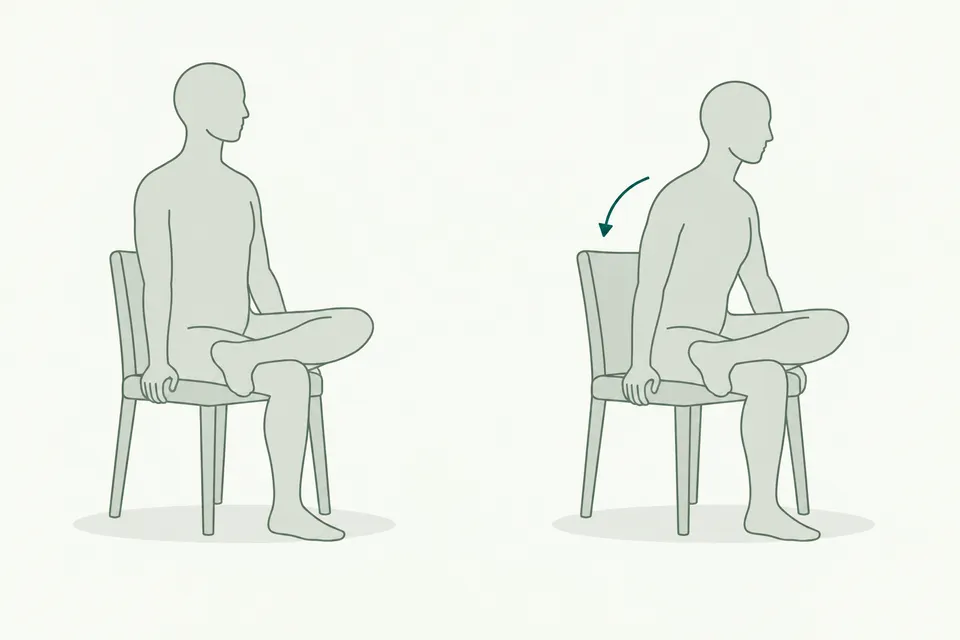
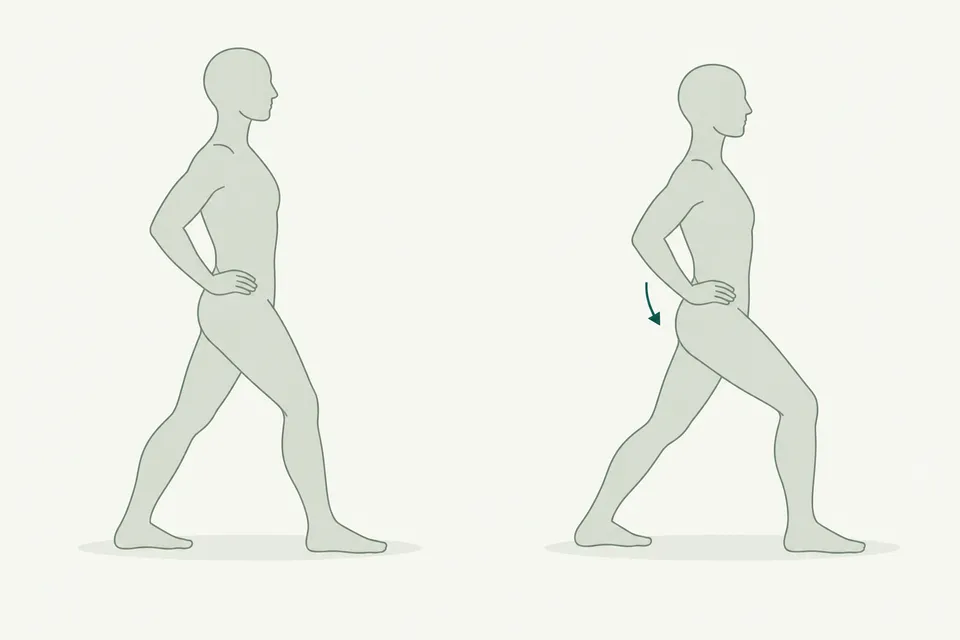
Sitting keeps the hips bent in one position for most of the day. These six movements move them in different directions: a seated march, a seated figure-four stretch, a standing hip-flexor stretch and supported sideways and backward leg lifts.
Hold a chair or a desk for balance whenever you stand. A lying knee opening is included as an optional floor movement. Stay in a comfortable range and stop if anything feels wrong.
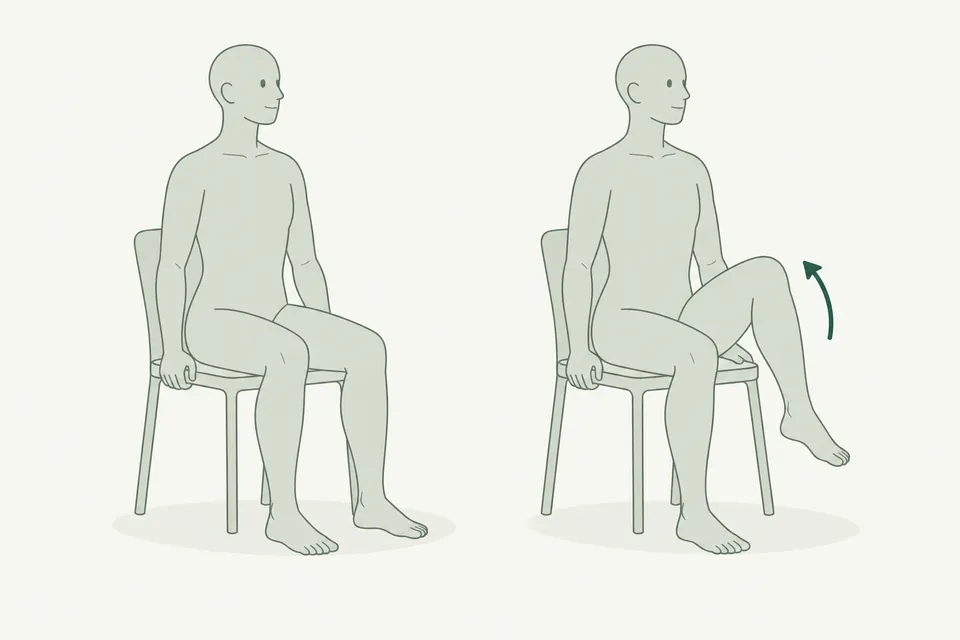
Sit on a stable chair without wheels, keeping your upper body upright.
Lift one knee without leaning your upper body. Lower your foot with control and alternate sides.
Floor movement
Lying knee opening
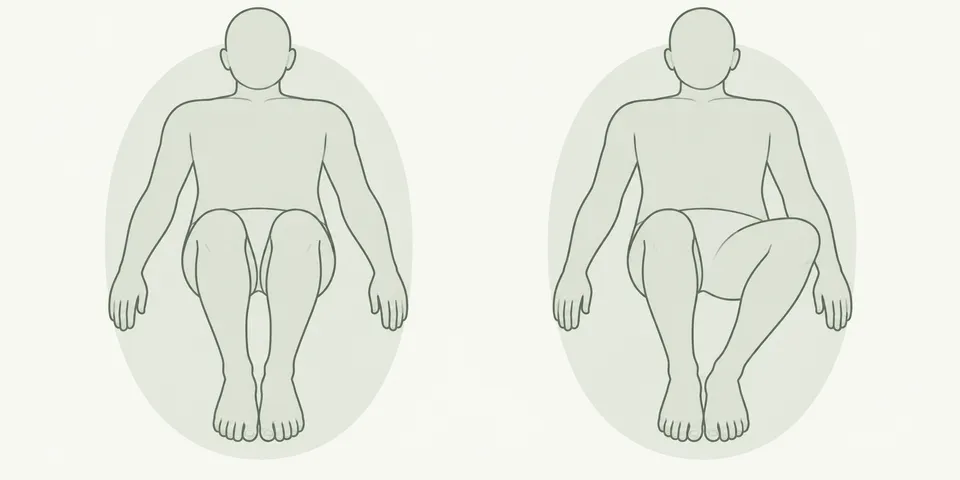
Lie on your back on a comfortable, safe surface with both knees bent.
Let one knee open slightly outward, then bring it back without turning your pelvis. Alternate sides.
Standing or seated
Supported sideways leg lifts
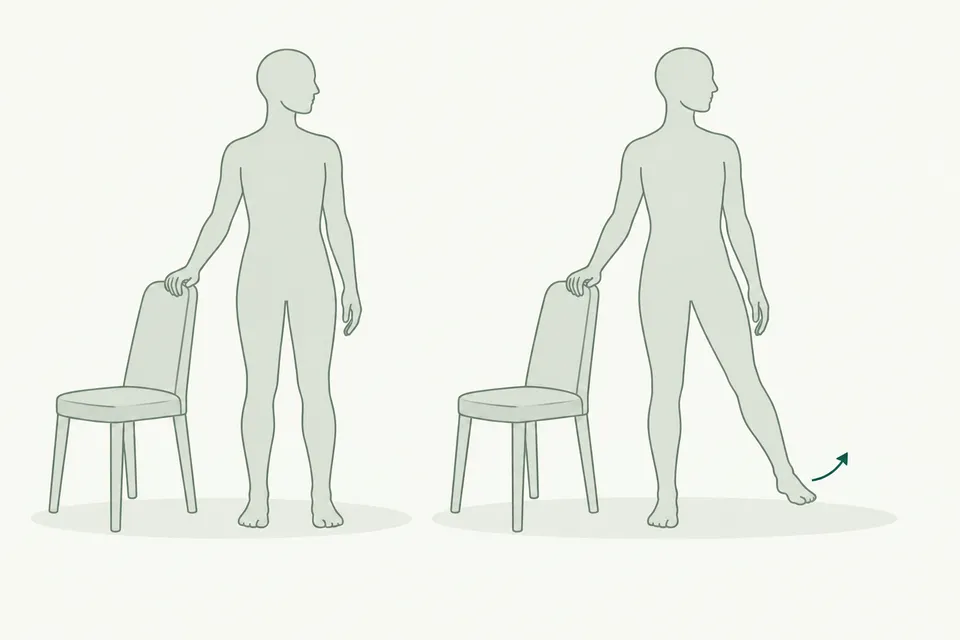
Stand upright holding the back of a stable chair without wheels on a non-slip surface.
Slowly lift one leg a little to the side and lower it with control. Keep your back and hips straight without leaning your torso; alternate legs.
Standing or seated
Supported backward leg lifts
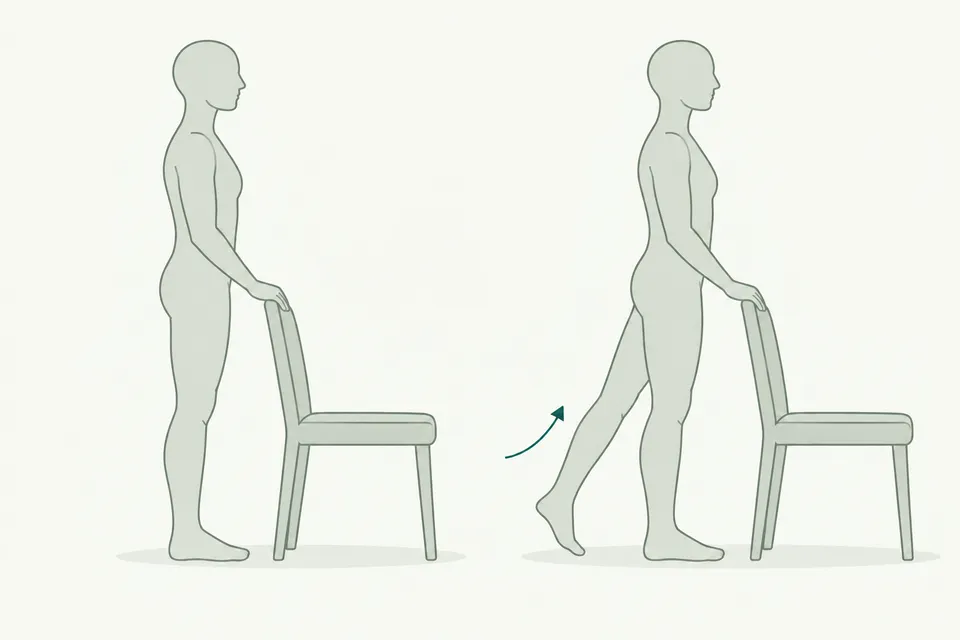
Stand upright holding the back of a stable chair without wheels on a non-slip surface.
Move one straight leg a little backward, then lower it with control and alternate. Keep your torso upright and your lower back neutral without leaning or arching.
Standing or seated
Seated figure-four stretch
Sit on a stable chair without wheels. If comfortable, rest one ankle on the opposite thigh above the knee, keeping the supporting foot planted.
Hold the sides of the seat and gently hinge forward at your hips with a neutral back. Do not push on your knee or force the crossed position. Return upright, uncross and switch sides.
Standing or seated
Standing hip-flexor stretch
Stand in a comfortable split stance, one foot ahead of the other, with your torso upright and hands on your hips.
Gently tuck your pelvis and soften your knees to lower a little, keeping your spine neutral. Both knees stay off the floor. Return and switch sides without arching your lower back.
i
Movement, not medical advice
For everyday stiffness, not pain or injury. Stay in a comfortable range and never force a stretch. Stop for pain, dizziness, tingling or numbness; seek qualified advice if symptoms persist. For an injury, recent surgery, pregnancy or a medical condition, ask a qualified professional before trying unfamiliar movements.