Typing and mousing keep the arms forward and the shoulders quiet for most of the day. These five movements bring them back into play: shoulder lifts, comfortable arm raises, shoulder-blade setting, a supported pendulum and a cross-body stretch.
All of them work standing or seated, need no equipment and should stay well within a comfortable range. Use them as a quick reset, or let the guided break pace them for you.
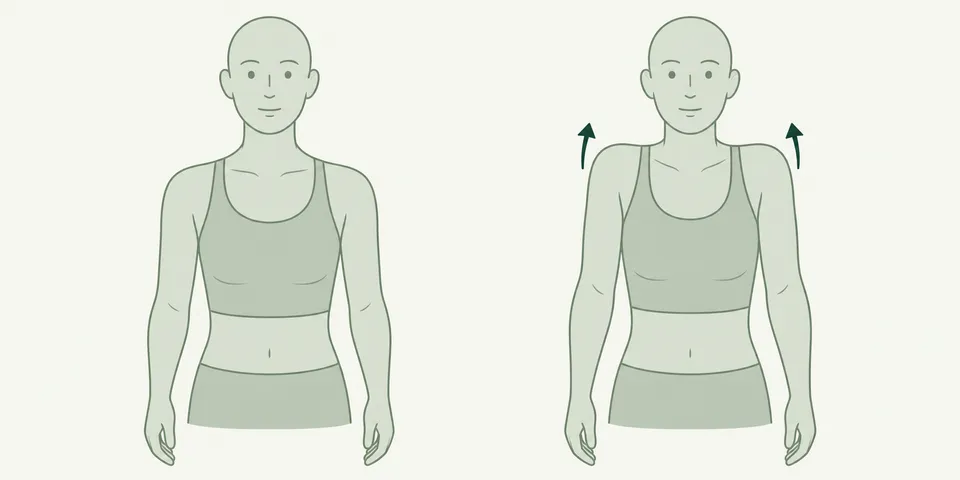
Gently lift both shoulders, then lower them without moving your head.
Standing or seated
Comfortable arm raises
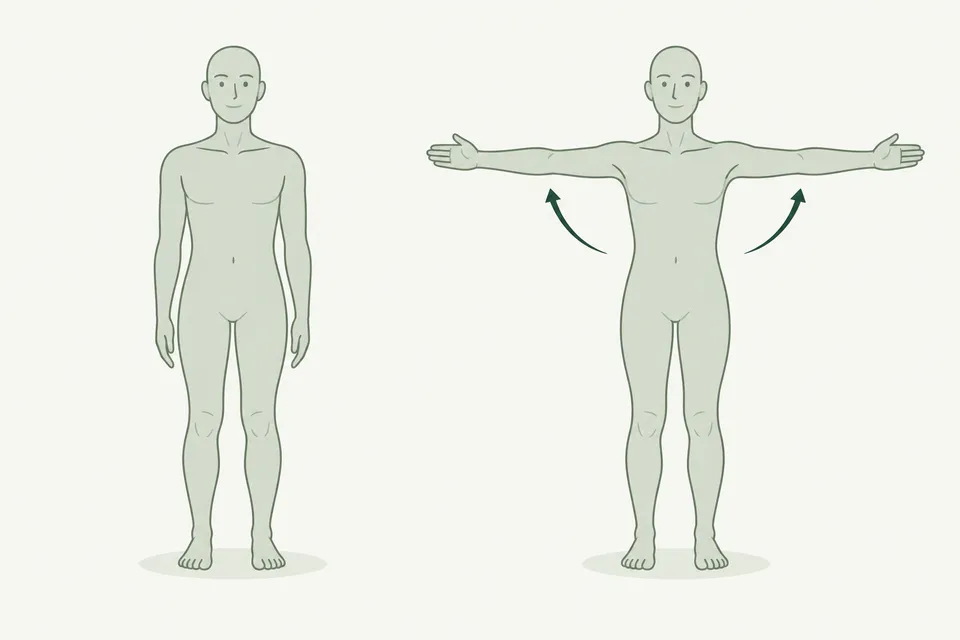
Start with both arms by your sides, keeping your back relaxed.
Raise your arms only as far as feels comfortable, then lower them slowly without arching your back.
Standing or seated
Shoulder-blade setting
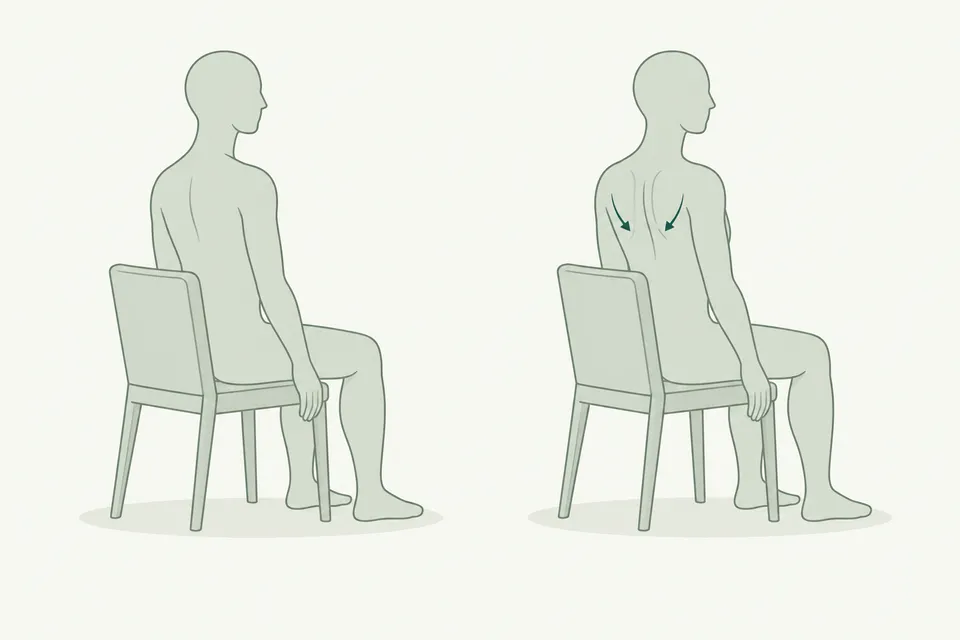
Sit tall on a stable chair without wheels, with your arms relaxed by your sides.
Gently draw your shoulder blades back and down, then release. Keep your neck relaxed and avoid shrugging or arching your lower back.
Standing or seated
Supported shoulder pendulum
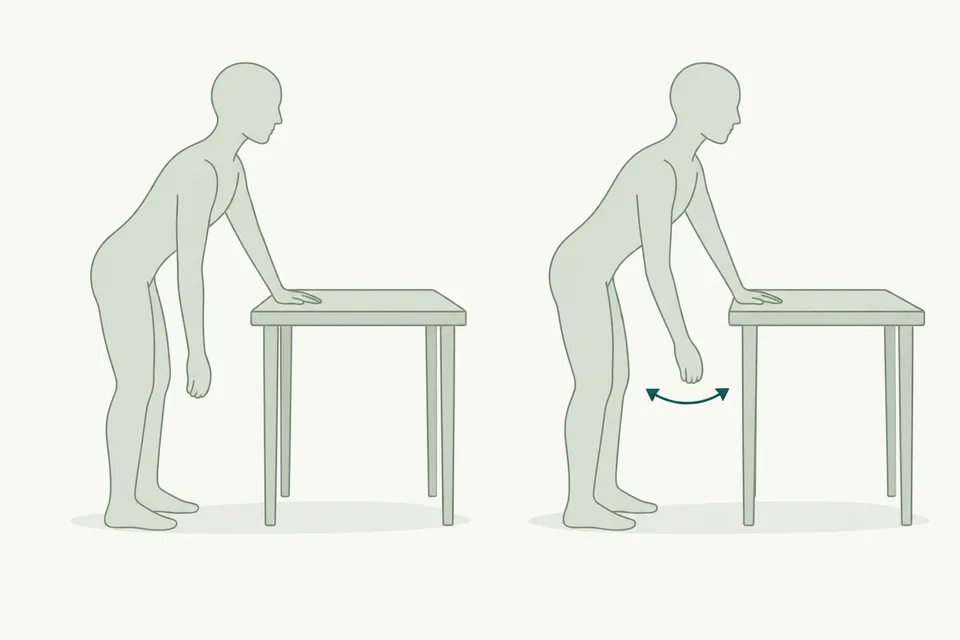
Support one hand on a stable table, soften your knees and hinge forward at your hips. Let the other arm hang relaxed.
Allow the hanging arm to swing gently a small distance forward and back. Keep the movement small and relaxed, then switch arms.
Standing or seated
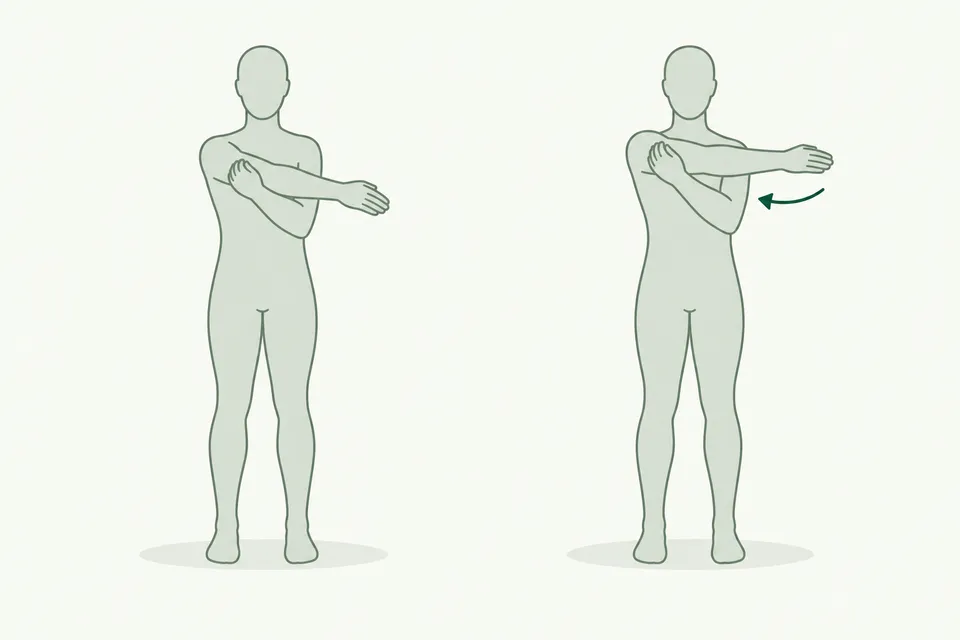
Cross-body shoulder stretch
Stand comfortably with your shoulders relaxed and bring one arm across your chest.
Support its upper arm with your opposite hand, without pressing the elbow joint. Use a gentle comfortable stretch, release and switch arms; keep your torso facing forward.
i
Movement, not medical advice
For everyday stiffness, not pain or injury. Stay in a comfortable range and never force a stretch. Stop for pain, dizziness, tingling or numbness; seek qualified advice if symptoms persist. For an injury, recent surgery, pregnancy or a medical condition, ask a qualified professional before trying unfamiliar movements.