Hours in the same seated position can leave the lower back feeling stiff. These seven movements offer small, gentle changes: pelvic tilts, weight shifts, standing side bends, a seated forward bend and a careful standing back extension.
Two of them, lying pelvic tilts and knee sways, are done on the floor and are optional when you have the space. Keep every movement small and comfortable. This guide is for everyday stiffness, not back pain.
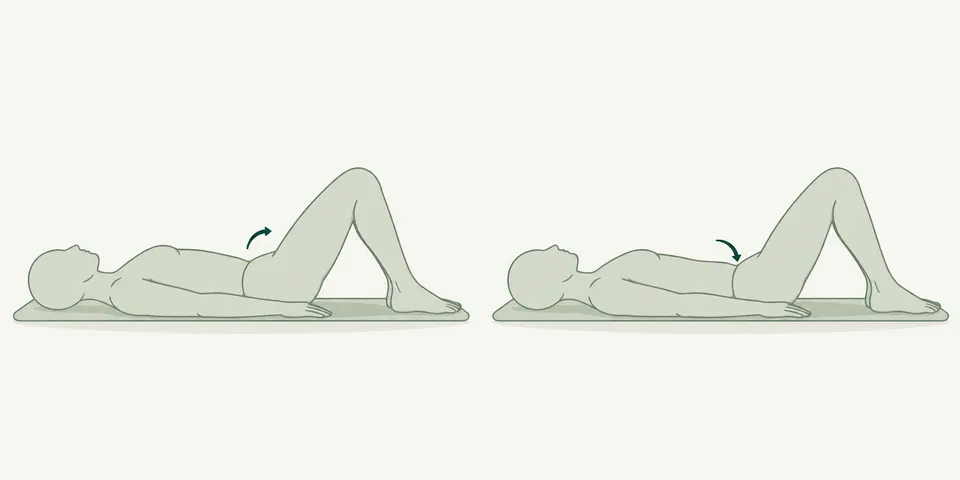
Lie on your back on a comfortable, safe surface with your knees bent.
Gently bring your lower back toward the floor, then return to a relaxed position. Do not lift your hips.
Floor movement
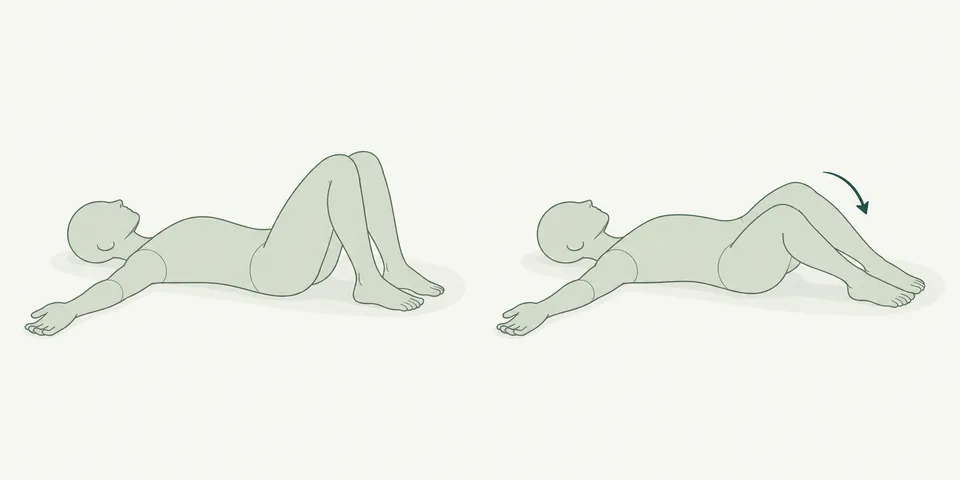
Lying knee sways
Lie on your back on a comfortable, safe surface, with your knees together and bent.
Move your knees a little to one side, return to the middle and alternate. Keep your shoulders down.
Standing or seated
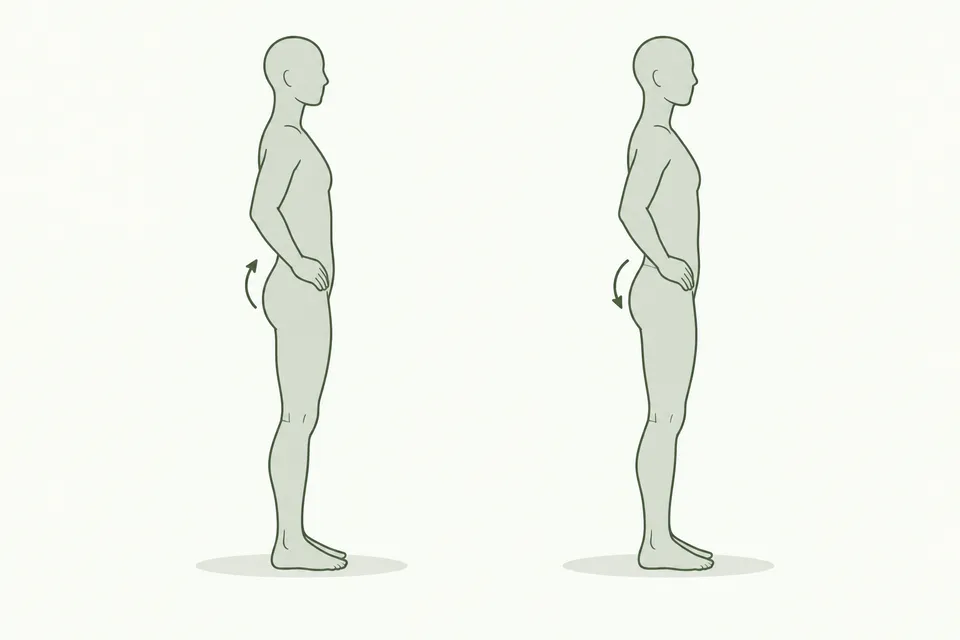
Small standing pelvic tilts
Stand with feet comfortably apart and knees soft.
Gently tip your pelvis forward and back through a small comfortable range. Avoid large back bends.
Standing or seated
Gentle weight shifts
Stand with feet comfortably apart and knees relaxed.
Slowly shift your weight from one foot to the other without leaning far. Stay within a comfortable range.
Standing or seated
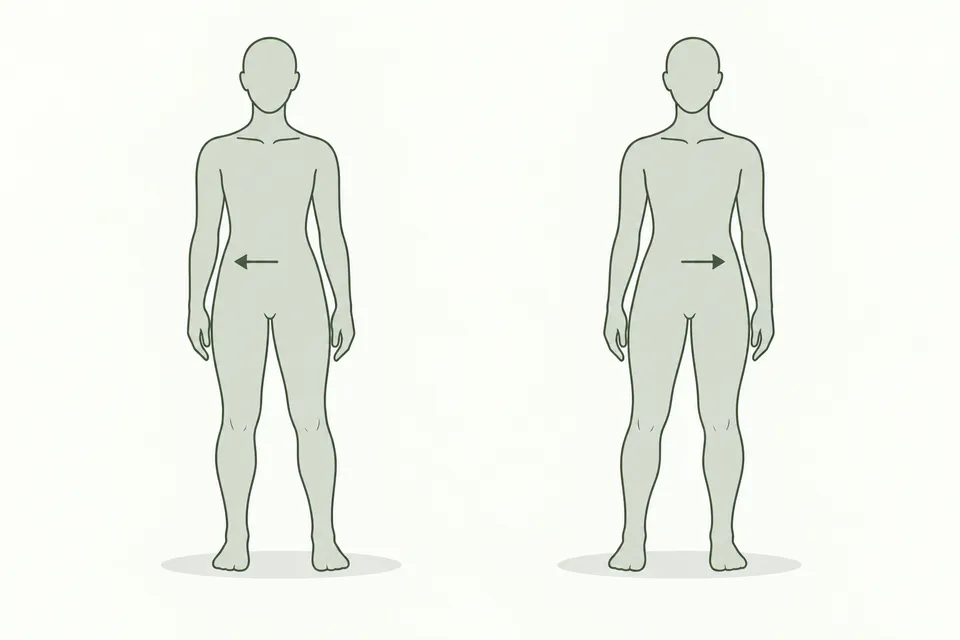
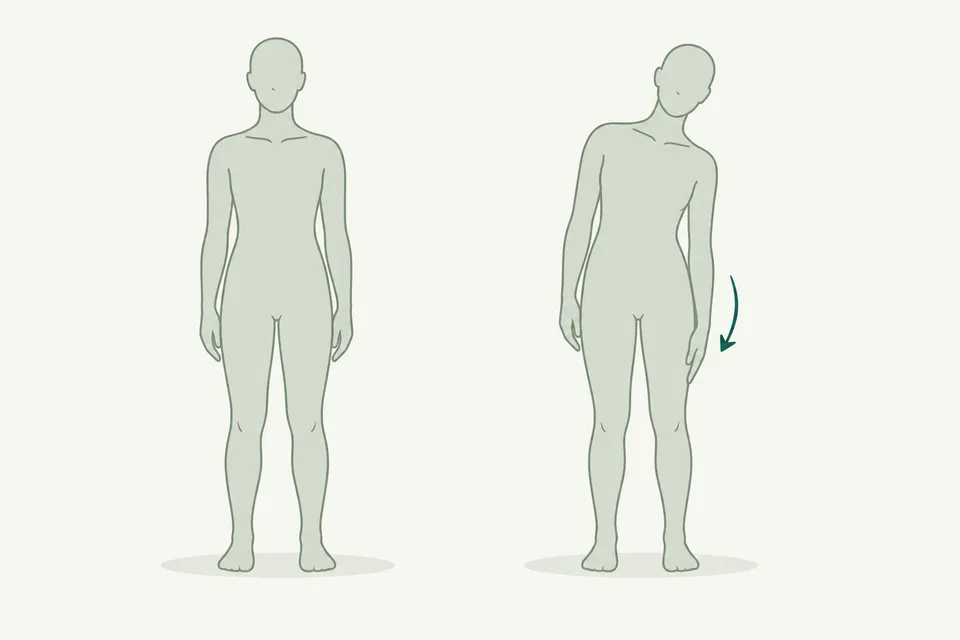
Standing side bends
Stand upright with feet hip-width apart and arms by your sides.
Slide one hand a little down the same side of your body, then return upright and alternate. Keep facing forward and stay within a comfortable range without bouncing.
Standing or seated
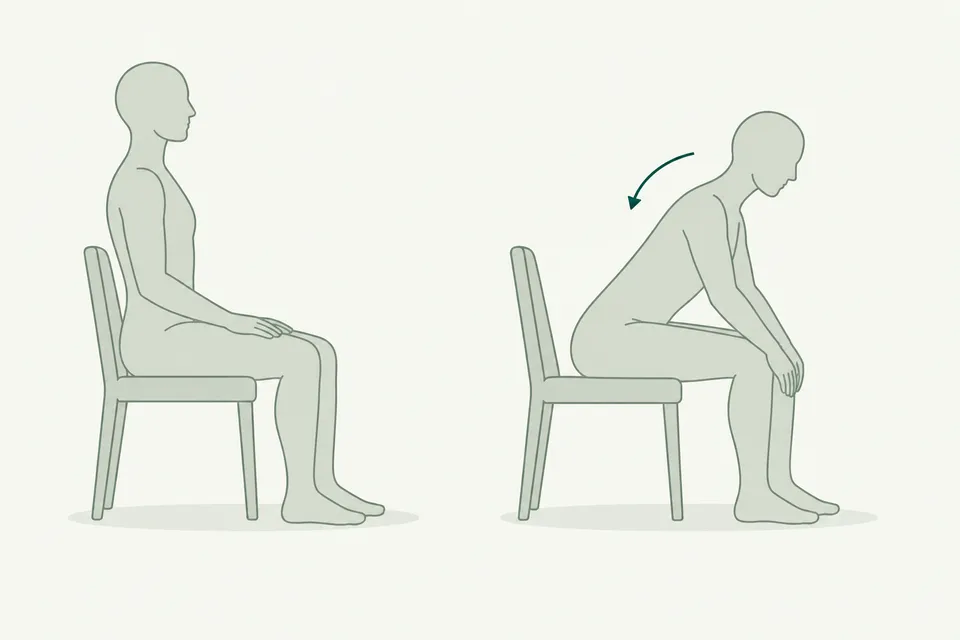
Seated forward bend
Sit on a stable chair without wheels, with your feet apart and planted. Rest your hands on your thighs.
Gently bend forward, sliding your hands down your legs only as far as comfortable, then return upright slowly. Stay seated and do not force a toe touch.
Standing or seated
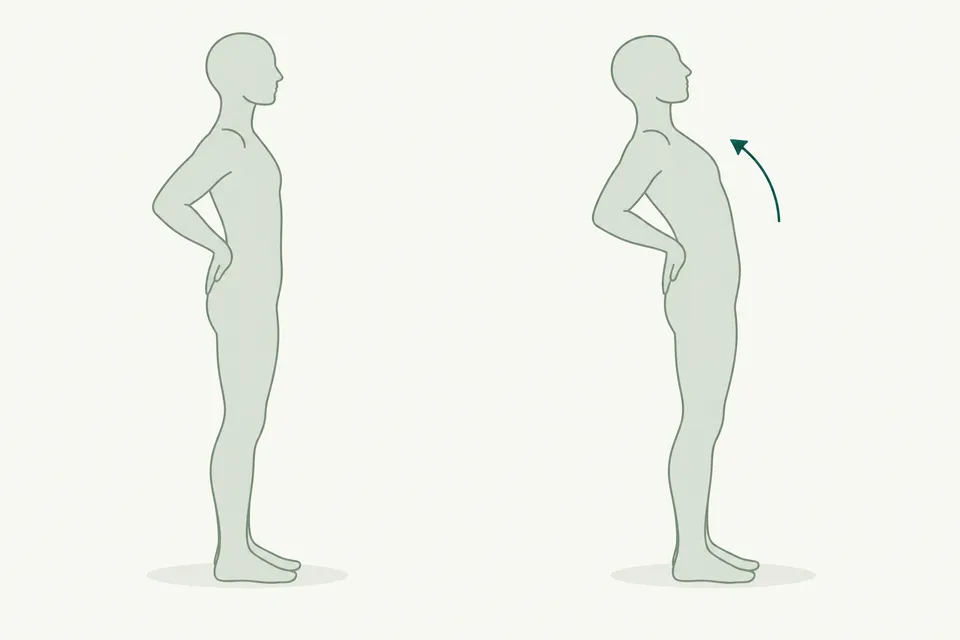
Gentle standing back extension
Stand with feet comfortably apart and knees soft. Support your lower back or the top of your buttocks with your hands.
Gently lean backward a small comfortable amount, then return upright. Avoid a deep arch or dropping your head backward; stop if uncomfortable.
i
Movement, not medical advice
For everyday stiffness, not pain or injury. Stay in a comfortable range and never force a stretch. Stop for pain, dizziness, tingling or numbness; seek qualified advice if symptoms persist. For an injury, recent surgery, pregnancy or a medical condition, ask a qualified professional before trying unfamiliar movements.