Keyboards, mice and phones keep the wrists and forearms working in small, repeated positions. These five movements take them through a wider, gentle range: flexion and extension, forearm turns, supported side glides, the prayer stretch and an assisted flexion stretch.
You can do them seated at your desk in a minute or two. Use light pressure only and never push into pain, tingling or numbness.
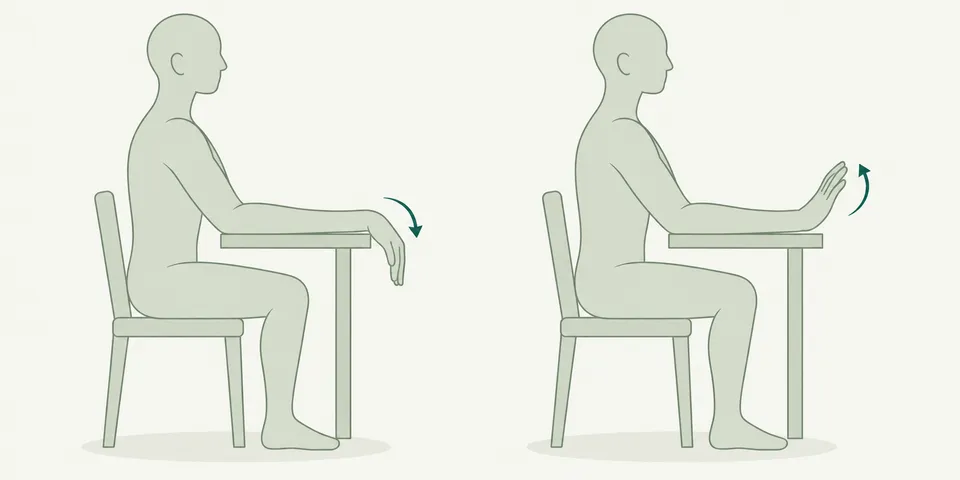
Support your forearm comfortably and keep your fingers relaxed.
Move your hand up and down slowly without helping with your other hand.
Standing or seated
Forearm turns
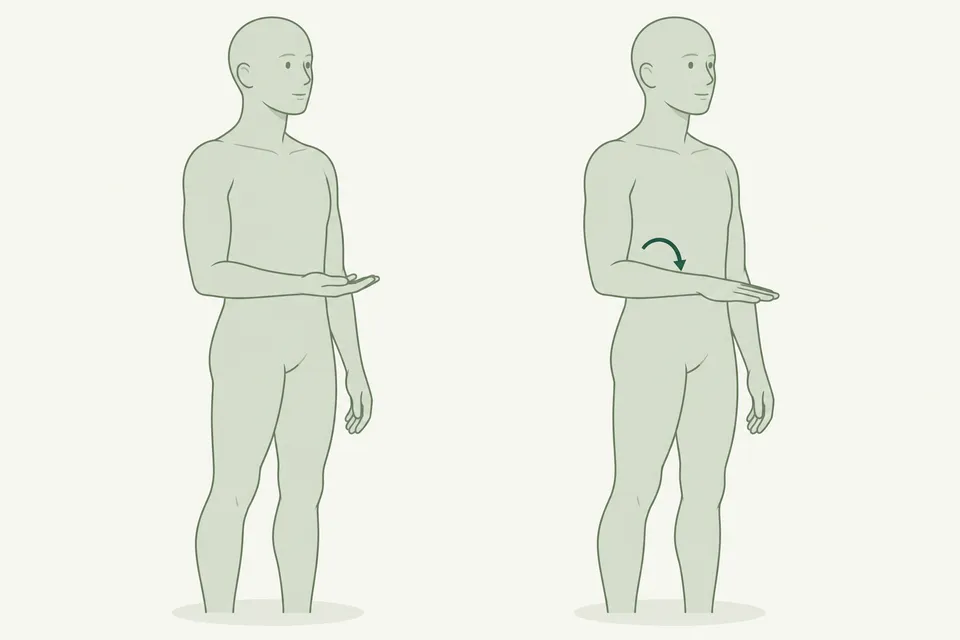
Keep your elbow bent and close to your body, with your wrist straight.
Slowly turn your palm upward and downward, keeping your wrist straight throughout.
Standing or seated
Supported wrist side glides
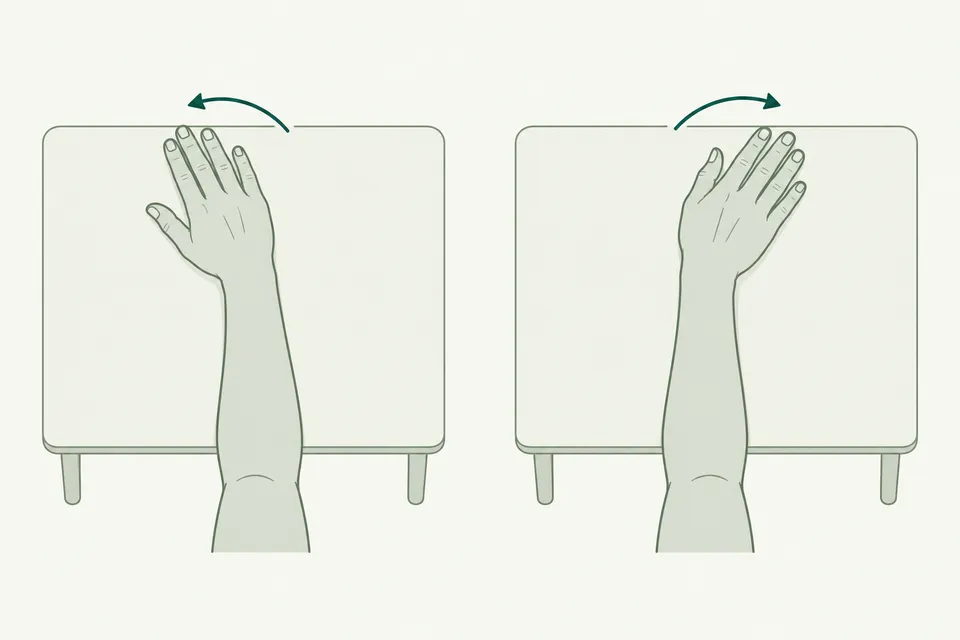
Rest your forearm and hand flat on a table, palm down and fingers relaxed.
Keeping your forearm still, gently move your hand toward the thumb side, then toward the little-finger side. Stay flat on the table and do not push with your other hand.
Standing or seated
Prayer wrist stretch
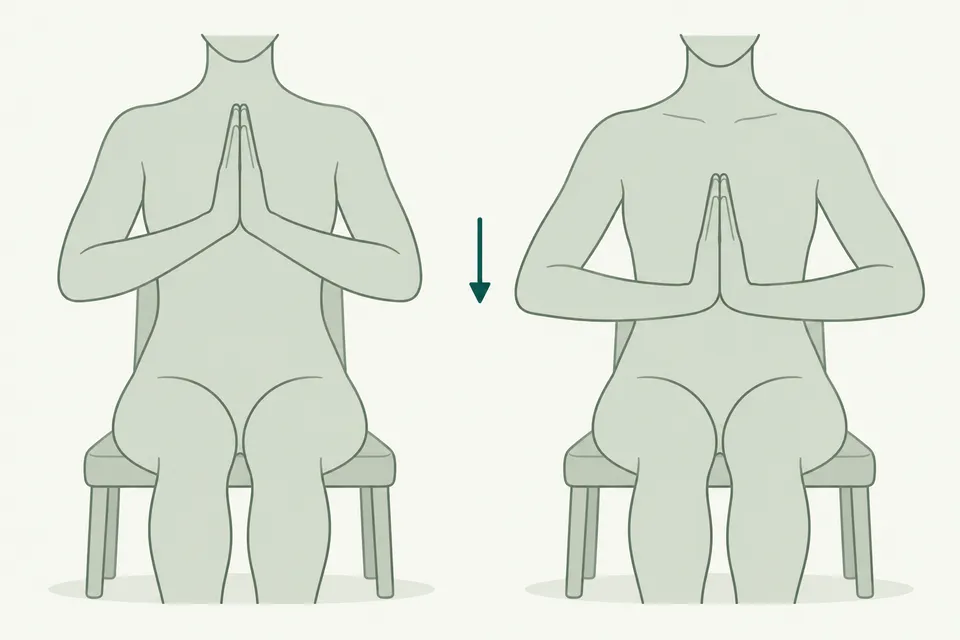
Bring your palms together at chest height, with your fingers pointing upward and shoulders relaxed.
Gently lower your hands a little while keeping your palms touching and letting your elbows move outward. Return and relax; do not force the stretch.
Standing or seated
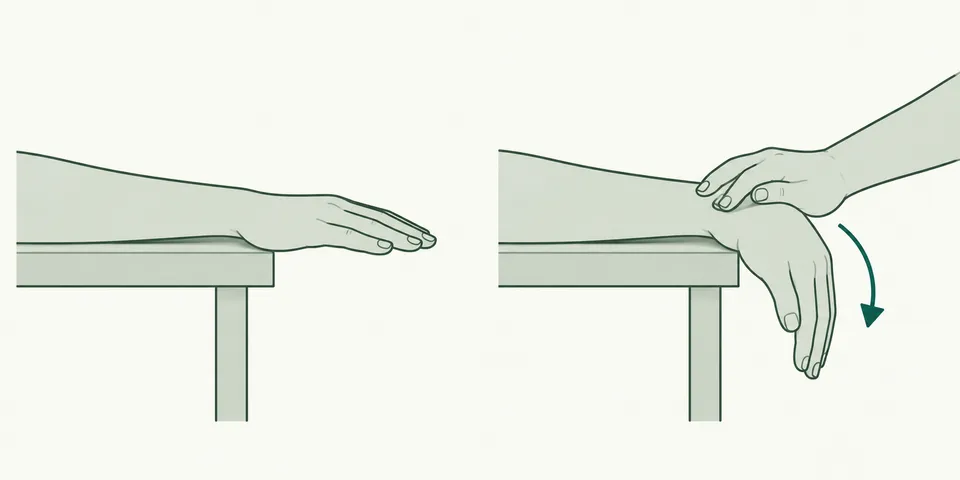
Assisted wrist-flexion stretch
Rest your forearm palm down on a table, with your hand free just beyond its edge.
Gently bend your wrist downward, using your other hand lightly on the back of the hand to guide it. Keep the forearm supported, do not pull your fingers, then release and switch sides.
i
Movement, not medical advice
For everyday stiffness, not pain or injury. Stay in a comfortable range and never force a stretch. Stop for pain, dizziness, tingling or numbness; seek qualified advice if symptoms persist. For an injury, recent surgery, pregnancy or a medical condition, ask a qualified professional before trying unfamiliar movements.