Long stretches of screen time tend to keep the head in one position for hours. These five seated neck movements give you a short, gentle change: slow turns, side tilts, chin retraction and small nods up and down.
Each movement is done on a stable chair, in a comfortable range and without pulling on your head. Try one or two between meetings, or open the guided break to follow them with a timer.
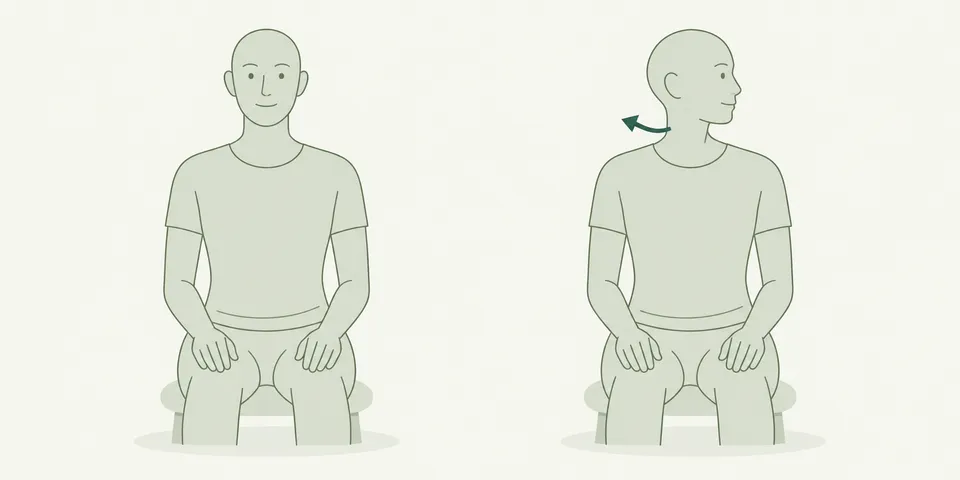
Sit on a stable chair without wheels, keeping your shoulders still.
Slowly turn your head to one side, return to the middle and alternate. Stay in a comfortable range without forcing.
Standing or seated
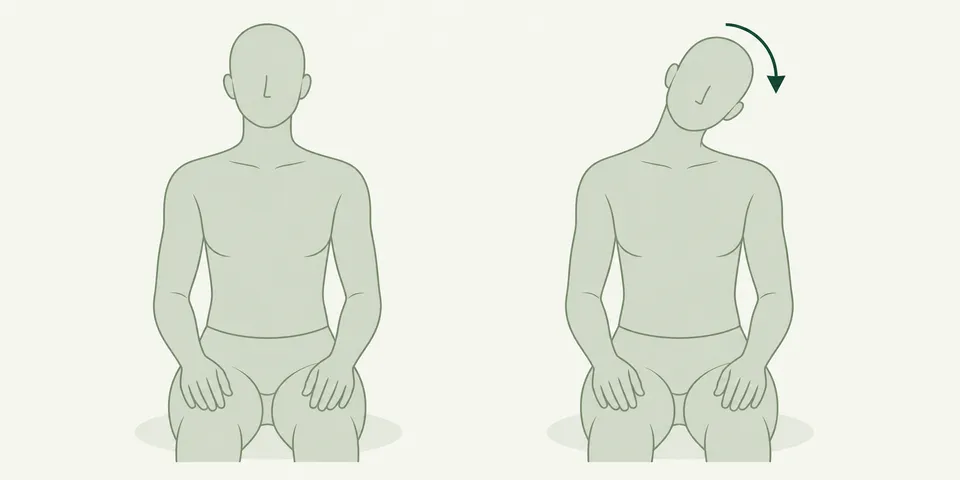
Side-to-side neck tilt
Keep your gaze forward and your shoulders down.
Gently tilt one ear toward its shoulder, return to the middle and alternate. Do not pull on your head.
Standing or seated
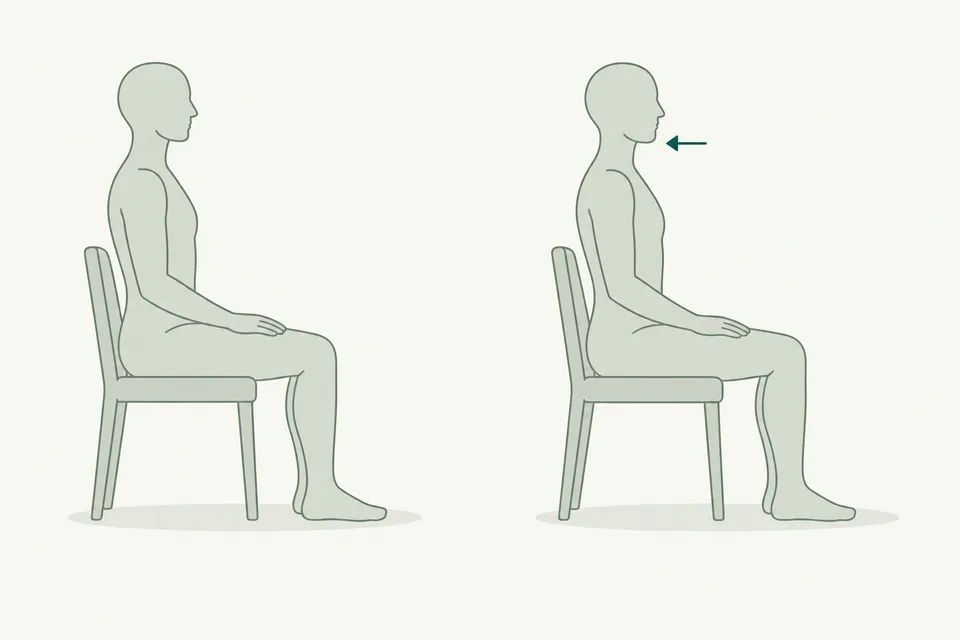
Seated chin retraction
Sit upright on a stable chair without wheels and look straight ahead.
Gently draw your chin straight backward, then relax. Keep your head level; do not tip it forward or backward or force the movement.
Standing or seated
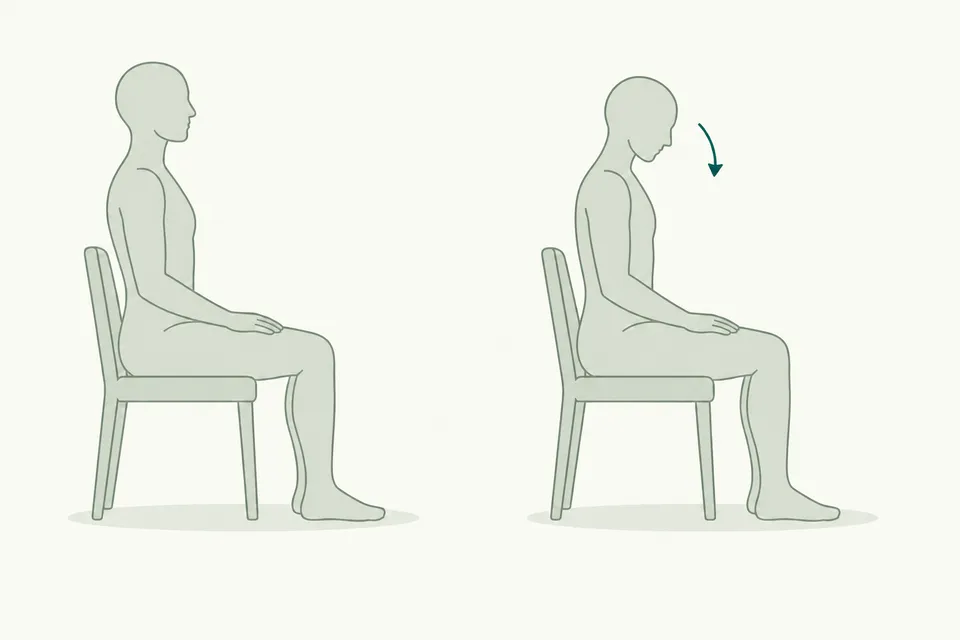
Seated neck flexion
Sit upright on a stable chair without wheels, with your shoulders relaxed.
Gently lower your chin toward your chest, then return to neutral. Keep your torso still and do not pull on your head. Stop if you feel dizzy or uncomfortable.
Standing or seated
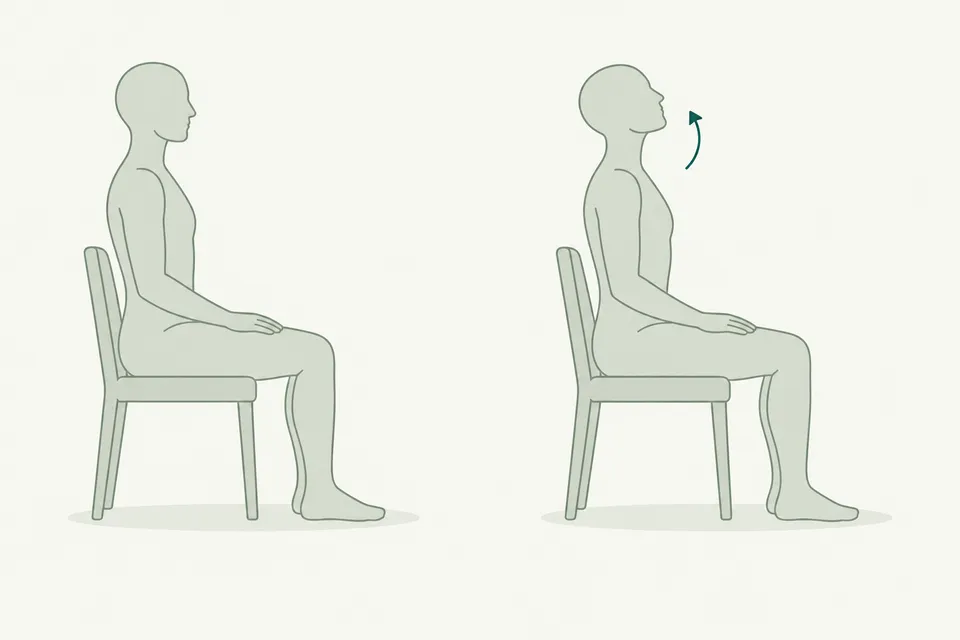
Seated neck extension
Sit upright on a stable chair without wheels and look straight ahead.
Gently look a little upward, then return to neutral. Keep your shoulders and torso still; do not drop your head far backward. Stop if you feel dizzy or uncomfortable.
i
Movement, not medical advice
For everyday stiffness, not pain or injury. Stay in a comfortable range and never force a stretch. Stop for pain, dizziness, tingling or numbness; seek qualified advice if symptoms persist. For an injury, recent surgery, pregnancy or a medical condition, ask a qualified professional before trying unfamiliar movements.