Sitting for long periods often means a rounded upper back and a closed chest. These five seated movements take your upper back through gentle turns, chest opening, rounding, extension and side bends.
You only need a stable chair without wheels. Move slowly, breathe normally and keep every position comfortable. Do them on their own or as a short guided break.
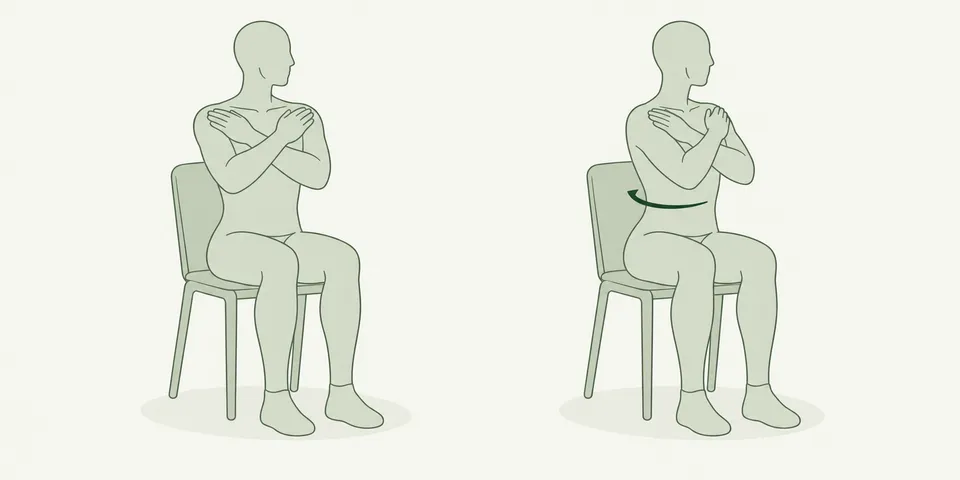
Sit on a stable chair without wheels, feet resting on the floor, and cross your arms over your chest.
Gently turn your upper body, keeping your pelvis and feet still. Return to the middle and alternate sides.
Standing or seated
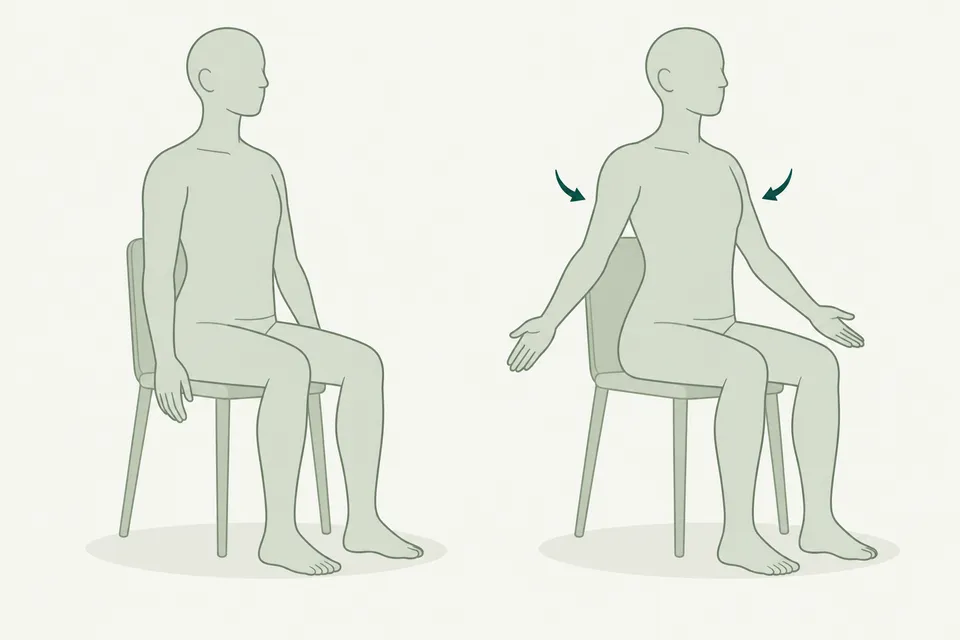
Seated chest opening
Sit on a stable chair without wheels, with your feet resting comfortably.
Open your arms slightly and bring your shoulders back and down. Avoid exaggerating the arch in your back.
Standing or seated
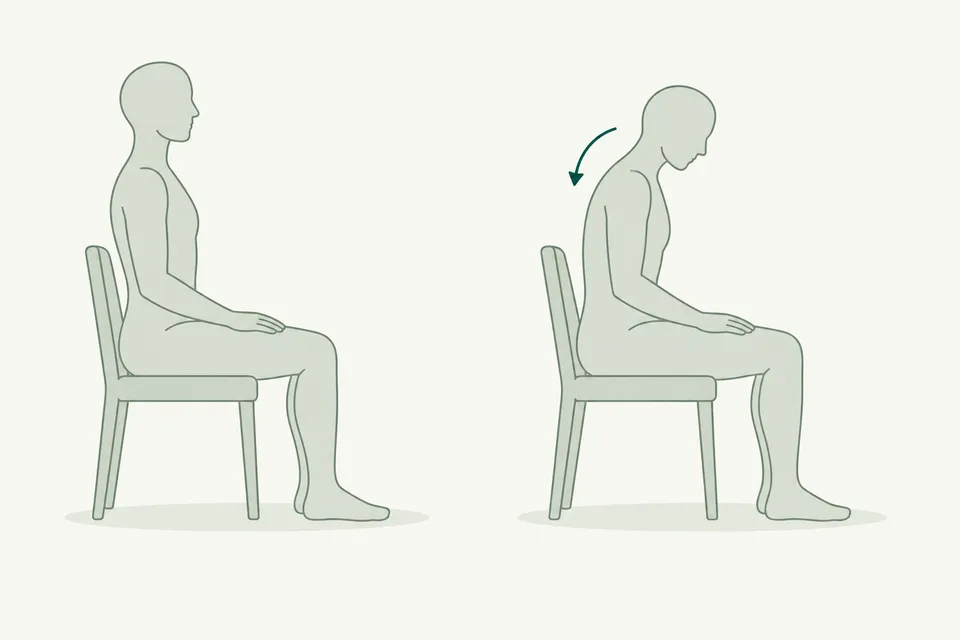
Seated upper-back rounding
Sit upright on a stable chair without wheels, with both feet firmly on the floor.
Gently bring your chin toward your chest and round your upper back a little, relaxing your head and shoulders. Slowly return upright without forcing the movement.
Standing or seated
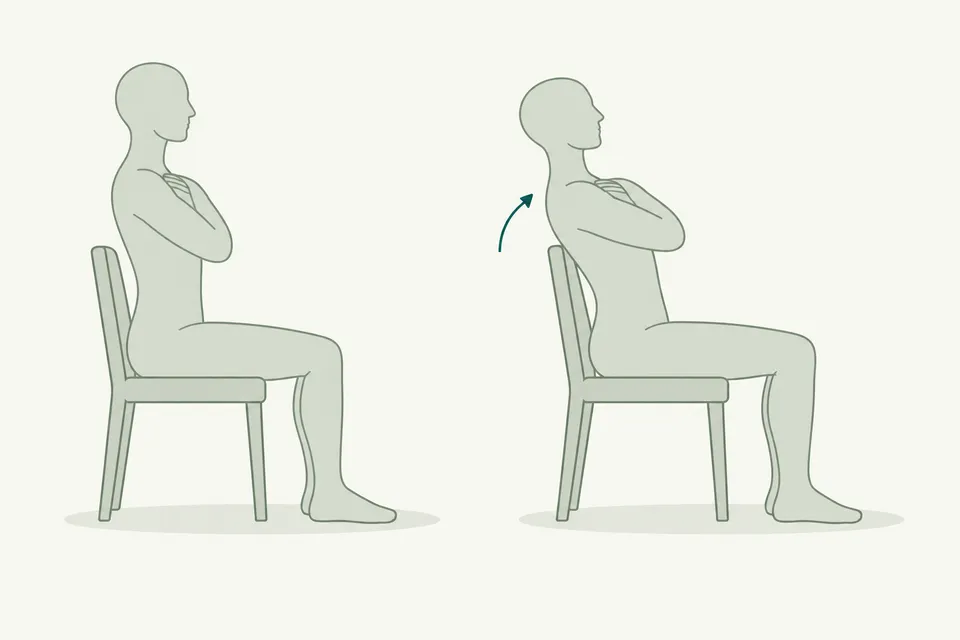
Seated upper-back extension
Sit on a stable chair without wheels, feet planted and the backrest supporting your middle back. Cross your arms loosely over your chest.
Gently open your chest and extend your upper back a little over the backrest, then return upright. Keep your pelvis seated; avoid arching your lower back or dropping your head backward.
Standing or seated
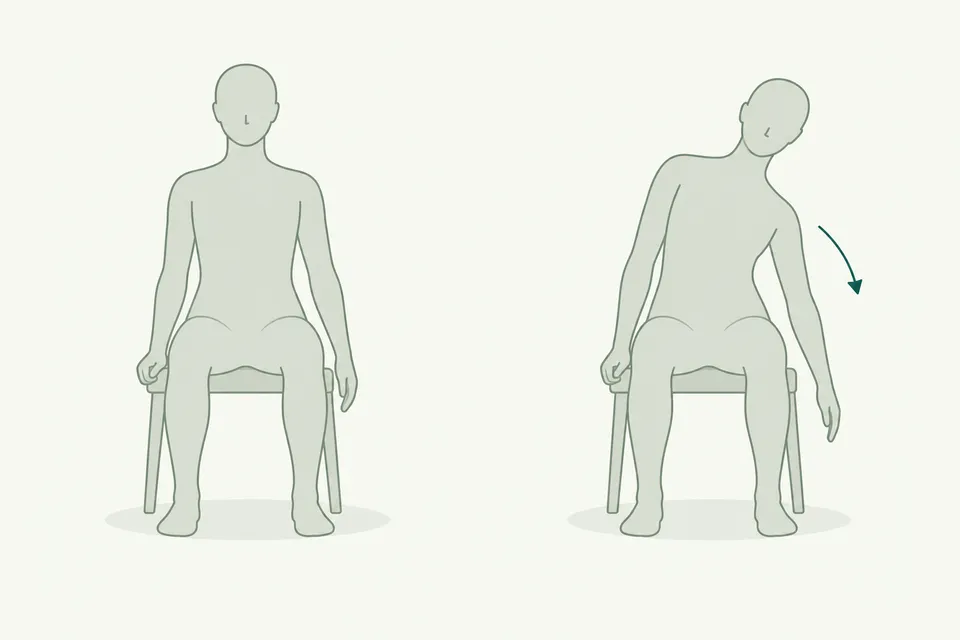
Seated side bends
Sit upright on a stable chair without wheels, with both feet planted. Hold the seat with one hand.
Gently bend sideways, reaching the other hand a little down beside the chair. Return upright and alternate sides. Keep your pelvis seated and your shoulders facing forward.
i
Movement, not medical advice
For everyday stiffness, not pain or injury. Stay in a comfortable range and never force a stretch. Stop for pain, dizziness, tingling or numbness; seek qualified advice if symptoms persist. For an injury, recent surgery, pregnancy or a medical condition, ask a qualified professional before trying unfamiliar movements.