When you sit for hours, your legs barely move. These five movements wake them up without leaving the office: seated knee extensions, ankle movement, a wall calf stretch, a seated hamstring stretch and supported heel raises.
Most of them can be done from your chair. For the standing ones, keep a hand on a wall, chair or desk for balance and move at an easy pace.
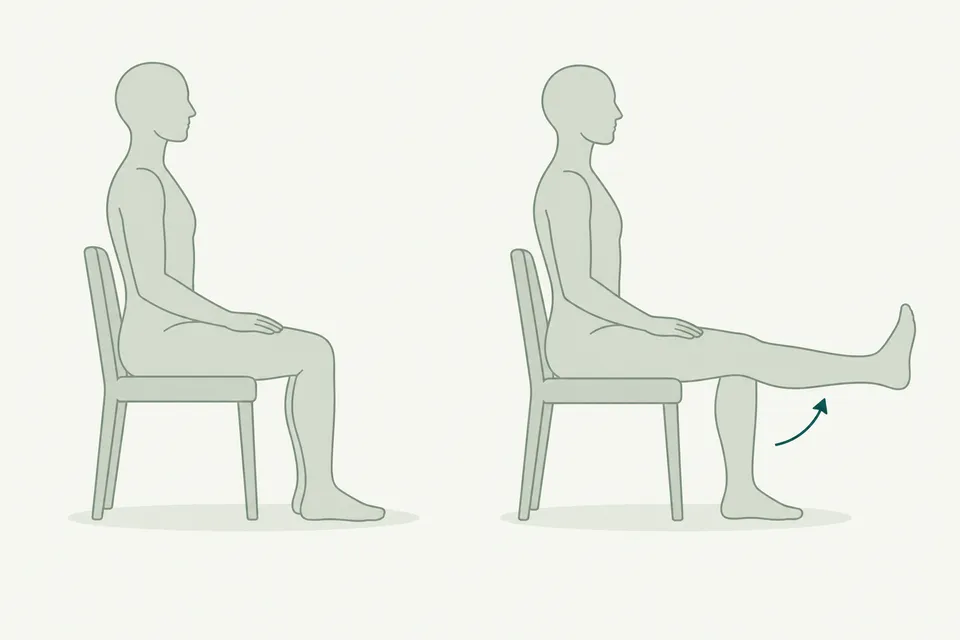
Sit on a stable chair without wheels, with your feet resting on the floor.
Straighten one knee without locking it, then lower your foot. Alternate legs.
Standing or seated
Seated ankle movement
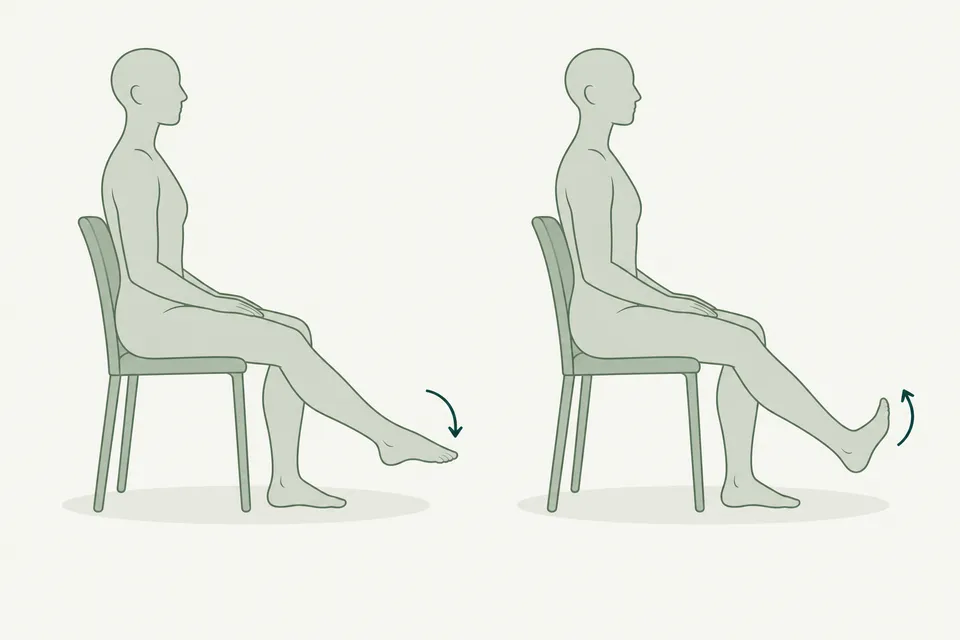
Sit on a stable chair without wheels and lift one foot slightly.
Alternate pointing your toes away and bringing them toward you. Switch feet.
Standing or seated
Wall calf stretch
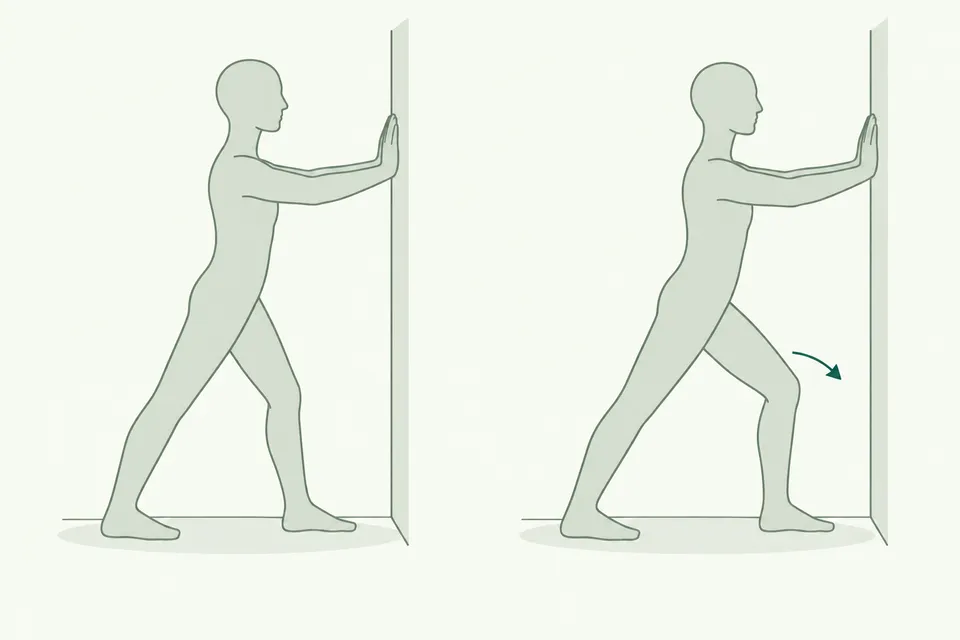
Place your hands on a wall for support. Step one foot back, keeping both feet flat and facing forward.
Gently bend the front knee while keeping the back leg straight and its heel down. Return and switch legs; do not bounce or force the stretch.
Standing or seated
Seated hamstring stretch
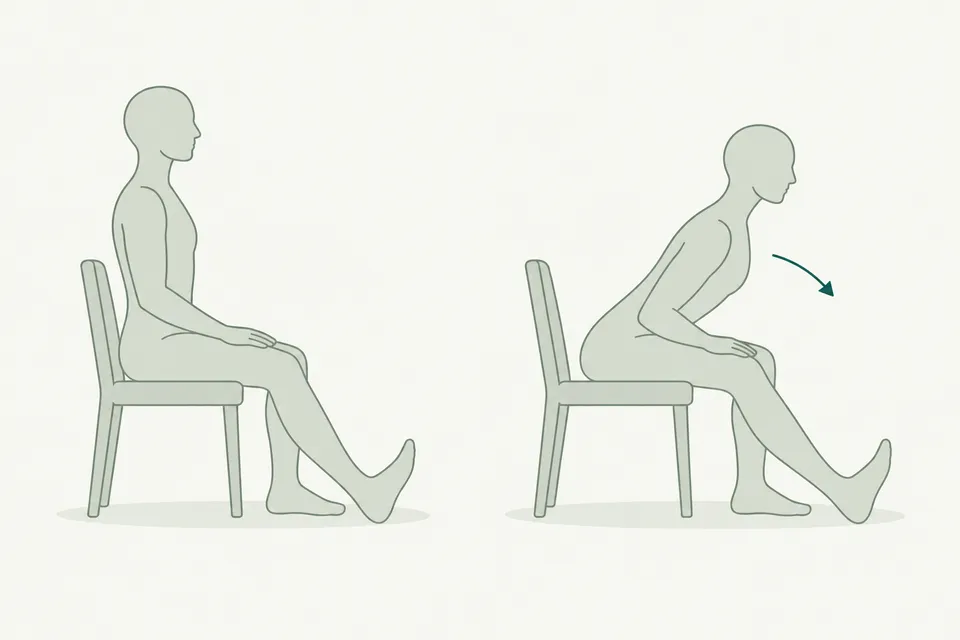
Sit near the front of a stable chair without wheels. Place one heel forward on the floor, toes up, with that knee nearly straight but not locked.
Gently hinge forward at your hips with a neutral back and hands resting on your thighs. Keep the heel down; return upright and switch legs without forcing or reaching for your toes.
Standing or seated
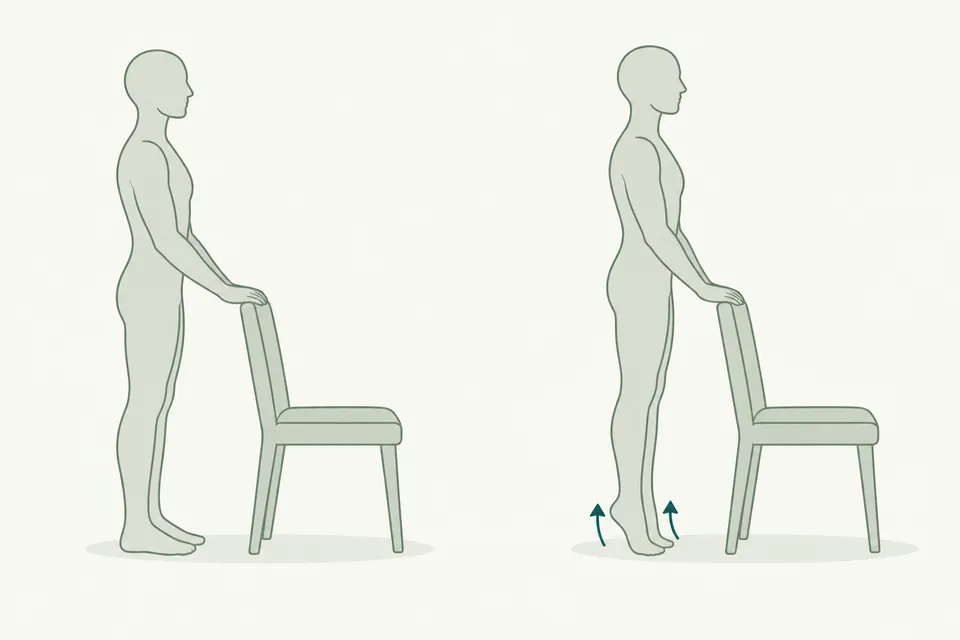
Supported heel raises
Stand upright with both hands on the back of a stable chair without wheels, on a non-slip surface. Start with both feet flat.
Slowly lift both heels a little while keeping your toes and the balls of your feet grounded, then lower with control. Keep your knees soft and do not jump.
i
Movement, not medical advice
For everyday stiffness, not pain or injury. Stay in a comfortable range and never force a stretch. Stop for pain, dizziness, tingling or numbness; seek qualified advice if symptoms persist. For an injury, recent surgery, pregnancy or a medical condition, ask a qualified professional before trying unfamiliar movements.